
89
Published
August 2026
Updated
August 2026
How to Use Airdrop Promotion Services to Build Long-Term Stakeholder Retention

Tyler Mullins
Founder & Owner of OMNI
Introduction
Airdrop promotion services have evolved far beyond simply posting your drop on listing sites or paying for Telegram shoutouts. In 2026, they represent a complete GTM architecture designed to build a long-term stakeholder base instead of attracting mercenary farmers who dump within 90 days.
$85 billion in all-time-high value has been distributed across the 50 largest airdrops, yet between 78% and 94% of airdrop recipients sold most of their allocation by day 90. The gap between distribution volume and retention reveals the central challenge: airdrops can generate massive initial participation, but most services still treat them as isolated growth tactics rather than integrated retention systems.

Modern airdrop promotion services solve the coordination problem that killed early drops. They synchronize community management, influencer partnerships, PR campaigns, and anti-Sybil architecture so your token launch doesn't become your project's death day. The difference between a low-cost listing service and a full-service agency often determines whether your community allocation builds protocol defenders or feeds industrial-scale farmers.
Table of Contents
What Are Airdrop Promotion Services?
How Do Airdrop Promotion Services Work?
Strategic Airdrop Models: Points, Retroactive, and Milestone-Gated
The Anti-Sybil Architecture Challenge
Multi-Channel Promotion: The Full-Funnel Approach
Post-Drop Retention Mechanisms
How Much Do Airdrop Promotion Services Cost?
Are There Any Legitimate Airdrops Happening in 2026?
Choosing the Right Airdrop Promotion Partner
Frequently Asked Questions
What Are Airdrop Promotion Services?
Airdrop promotion services are specialized marketing systems that position token distributions as sustainable GTM events rather than one-time giveaways. They encompass strategic design, multi-channel coordination, Sybil filtering, regulatory positioning, and post-launch retention mechanics.
A legitimate airdrop promotion service in 2026 handles five core functions:
Strategic Architecture - Defining your distribution model (points program, retroactive, milestone-gated), community allocation percentage, vesting schedules, and eligibility criteria before a single wallet connects.
Narrative Development - Building the "why this matters" story that differentiates your distribution from the 11.6 million token failures flooding social feeds. This narrative must work across X threads, Discord announcements, and tier-1 crypto media simultaneously.
Multi-Channel Coordination - Synchronizing influencer activations, PR placements, community management, and paid media so your target users discover the opportunity before industrial farmers do.
Sybil Defense - Implementing restricted eligibility or detection tools to protect your floor price from the wallet farms that extract value without contributing to protocol growth.
Post-Drop Retention - Designing buyback assistance, staking incentives, or governance participation mechanisms that convert claimers into long-term stakeholders.
The mechanism differs sharply from legacy "airdrop marketing" that simply amplified claim announcements. Modern services operate upstream, shaping tokenomics and launch timing to align with retention goals rather than vanity metrics like total claimers.
The SEC Interpretive Release (March 17, 2026) clarifies that airdrops without consideration do not satisfy the 'investment of money' prong of the Howey test, creating a regulatory opening for no-consideration distributions. However, task-based bounty airdrops remain in a grey area, making professional guidance on distribution structure increasingly valuable for projects seeking long-term legitimacy.
How Do Airdrop Promotion Services Work?
Professional airdrop promotion unfolds across four coordinated phases, each addressing a specific failure mode that collapses retention.
Phase 1: Strategic Model Selection
The service evaluates your protocol stage, community maturity, and growth objectives to recommend a distribution structure. A DeFi protocol with existing users might use a retroactive drop to reward early liquidity providers. A gaming studio pre-launch might implement a points program tied to Discord engagement and testnet participation. An infrastructure project might gate emissions behind network milestones.
This phase includes tokenomics consultation on community allocation percentage, lock-up schedules, and whether to implement gradual unlocks or cliff-based vesting. 85% of token generation events (TGEs) in 2025 resulted in tokens trading below initial valuations with a median decline of 70%, largely because teams optimized for initial hype rather than sustainable holder incentives.

Phase 2: Anti-Sybil Architecture
The service designs eligibility criteria that favor genuine users over industrial farmers. This might include minimum transaction thresholds, time-weighted activity requirements, or integration with verification systems like Gitcoin Passport. Roughly 39.85% of unique addresses in the Linea airdrop were flagged as Sybil (516,960 out of 1.29 million), demonstrating why structural prevention beats post-hoc detection.
Restriction-based approaches (requiring specific on-chain behavior patterns) typically outperform detection-based systems (flagging suspicious wallets after claiming). The best services build multi-layered filters: requiring both meaningful on-chain activity and community participation across Discord or governance forums.
Phase 3: Multi-Funnel Promotion
The agency activates synchronized campaigns across influencers, PR, community management, and paid media. This coordination prevents "narrative leakage" where farmers discover the opportunity through back-channels before your target audience sees official announcements.
Web3 KOL partnership best practices focus on micro-influencers with engaged followings rather than vanity partnerships that generate impressions without conversions. The service typically manages 15-40 creator relationships, timing content drops to create cascading awareness rather than a single spike.
PR placements in outlets like CoinDesk, Decrypt, and The Block build legitimacy signals that help institutional participants distinguish your distribution from low-quality farming opportunities. Community management turns Discord and Telegram channels into information hubs where early adopters can verify claim criteria and ask questions without navigating scam-filled Twitter threads.
Phase 4: Post-Launch Retention Mechanics
The most sophisticated services don't end at claim day. They implement or advise on buyback programs, staking incentives, and governance activation. Hyperliquid Assistance Fund has bought back more than $1.16 billion of HYPE from the open market to sustain price post-airdrop, demonstrating how price support mechanisms can convert mercenary claimers into long-term holders.
Strategic Airdrop Models: Points, Retroactive, and Milestone-Gated
The three dominant distribution architectures in 2026 address different project stages and user acquisition goals.
Points Programs
Points systems track engagement over weeks or months, converting accumulated activity into token allocation at TGE. They work well for pre-launch projects building anticipation or established protocols introducing new features.
The mechanics typically include multiple earning paths: social engagement (Discord activity, X shares), on-chain actions (testnet transactions, liquidity provision), and community contributions (content creation, governance participation). Points programs create ongoing touchpoints that keep users engaged through extended development timelines.
The risk lies in gamification attracting point farmers rather than genuine users. Effective programs weight on-chain activity (which requires gas fees and real participation) more heavily than zero-cost social tasks.
Retroactive Airdrops
Retroactive distributions reward users who already used a protocol before the token existed. Uniswap's September 2020 airdrop set the standard by allocating 400 UNI to every wallet that had completed a swap, instantly creating hundreds of thousands of stakeholders who had already demonstrated product-market fit.
This model works exceptionally well for protocols with established user bases but requires careful snapshot timing. Too early and you miss recent adopters; too late and speculation distorts genuine usage patterns. The service typically helps projects identify meaningful activity thresholds that separate real users from airdrop hunters who complete single transactions across thousands of wallets.
Milestone-Gated Emissions
Newer projects are moving toward performance-linked distributions where tokens unlock only when the protocol hits specific growth milestones. This aligns team and community incentives around actual product adoption rather than speculation.
Some projects now gate a substantial portion of supply behind network performance metrics. This structure prevents the "launch and dump" pattern where mercenary participants claim immediately and exit, leaving the protocol with a collapsed token price and demoralized community.
The service helps define achievable yet meaningful milestones (TVL targets, active user counts, transaction volumes) and structures gradual unlocks that sustain participation through multiple growth phases.
The Anti-Sybil Architecture Challenge
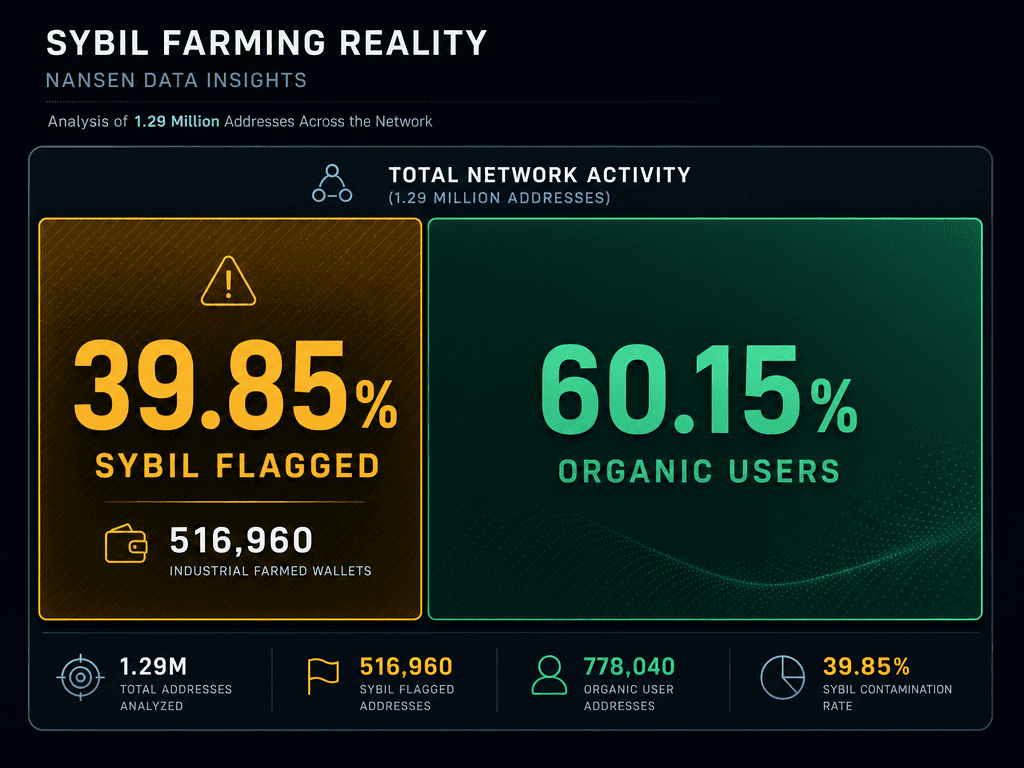
Industrial-scale Sybil farming represents the primary threat to airdrop success. Professional farmers operate thousands of wallets, completing minimum eligibility requirements across each one to maximize claim allocation.
Modern airdrop promotion services implement multi-layer defense systems that make farming economically unviable.
Restriction Over Detection
The most effective approach restricts eligibility to wallets with behavior patterns too expensive to fake at scale. Examples include:
Minimum time-weighted average balance across six months
Participation in at least three distinct protocol features (swap, stake, vote)
Completion of actions requiring meaningful gas fees across multiple networks
Verification through identity systems like Gitcoin Passport
These structural filters prevent farming rather than attempting to detect it after the fact. By the time analytics identify Sybil clusters, those wallets have already claimed and dumped.
Layered Verification
Sophisticated services combine on-chain requirements with off-chain participation. A wallet might need both meaningful historical trading volume and active membership in your Discord with verified role completion. The additional friction eliminates casual farmers while genuine users complete both paths naturally.
Dynamic Eligibility Windows
Services sometimes recommend snapshot timing designed to catch farmers off-guard. Instead of announcing "all wallets active between Date X and Date Y qualify," they use rolling windows or multiple surprise snapshots that reward sustained participation over quick farming operations.
The Linea case study demonstrates why this matters: a substantial portion of claimers contributed nothing beyond the minimum actions required to qualify, extracting value without adding to the ecosystem. Your airdrop promotion service should prioritize user quality over claim quantity.
Multi-Channel Promotion: The Full-Funnel Approach
Effective crypto community management coordinates awareness, education, and conversion across multiple touchpoints simultaneously.
Influencer Activation
The service activates 15-40 crypto-native creators across YouTube, X, and Discord. Micro-influencers (10k-100k followers) typically deliver better ROI than mega-influencers because their audiences actively participate in new opportunities rather than passively consuming content.
Content timing cascades: tier-1 creators announce eligibility criteria, mid-tier influencers publish tutorials and walkthroughs, and community advocates answer questions in Discord and Telegram. This creates multiple discovery paths so users encounter your airdrop through trusted sources rather than random Twitter threads.
PR and Media Relations
Placements in CoinDesk, Decrypt, The Block, and BeInCrypto build the legitimacy signal that separates your distribution from low-quality farming opportunities. Institutional participants and sophisticated users research new opportunities through these outlets, making tier-1 coverage essential for attracting long-term holders rather than mercenary claimers.
The service typically secures 3-7 placements across launch week, each emphasizing different angles: the technical innovation justifying your token, the community-first allocation structure, or the governance rights that make holding valuable beyond speculation.
Community Management
Discord community management transforms your server into the authoritative source for airdrop information. The service implements role-based access, dedicated FAQ channels, and active moderation that filters scammers while helping genuine users navigate claim processes.
This centralized information hub prevents the fragmentation where users encounter conflicting eligibility criteria across different Twitter threads or Telegram groups. Clear, consistent communication reduces support burden and builds trust.
Paid Media
Crypto paid advertising reaches users who don't follow influencers or read crypto news. The service runs targeted campaigns across Google (where policy permits), crypto-native ad networks, and retargeting sequences that convert awareness into wallet connections.
Paid media works best as a supporting channel rather than the primary driver, complementing organic and influencer traffic rather than replacing it.
Post-Drop Retention Mechanisms
The most critical phase begins after claim day. Professional services help implement or advise on three retention systems:
Buyback Programs
Following Hyperliquid's model, projects allocate treasury funds to repurchase tokens from the open market during price declines. This price support converts the typical 90-day dump pattern into gradual distribution as mercenary sellers exit and committed holders accumulate.
The service helps structure buyback timing (continuous small purchases vs. strategic larger buys during panic selling) and communication (transparency about remaining funds vs. strategic ambiguity to deter shorting).
Staking and Yield Mechanisms
Lock-up incentives reward holders who commit tokens for 30-365 days with yield, governance weight, or additional token emissions. This directly counters the dump incentive by creating opportunity cost for immediate selling.
Effective staking systems offer tiered durations (7-day, 30-day, 90-day, 365-day) with proportional rewards, allowing users to choose commitment levels that match their conviction.
Governance Activation
Converting token holders into active governance participants builds long-term alignment. The service helps design voting systems, delegate frameworks, and proposal structures that make governance accessible rather than dominated by whales.
Snapshot integration, forum discussions before on-chain votes, and delegation to community representatives all increase participation rates and create ongoing reasons to hold beyond speculation.
How Much Do Airdrop Promotion Services Cost?
Pricing varies dramatically based on scope and service tier.
Listing Services - Budget platforms like Fiverr or specialized airdrop listing sites simply add your project to directories and Telegram channels. These generate high claim counts from professional farmers with minimal conversion to long-term users. Expect substantially elevated dump rates within the first month.
Mid-Tier Agencies ($5,000 - $20,000) - Boutique crypto marketing shops offer influencer packages, basic PR outreach, and community setup. They coordinate 5-15 creator partnerships and secure placements in tier-2/3 outlets. Quality varies significantly based on the agency's network and Web3 expertise.
Full-Service Agencies ($20,000 - $100,000+) - Specialized Web3 marketing firms like OMNI provide complete GTM architecture: strategic model design, anti-Sybil consultation, coordinated campaigns across 20-40 influencers, tier-1 PR placements, dedicated community management, and post-launch retention mechanics. This tier typically includes ongoing support through the first 90 days when retention patterns stabilize.
The price difference reflects fundamentally different approaches. Low-cost services optimize for claim volume and social metrics. Full-service agencies optimize for holder retention, floor price stability, and conversion of claimers into active ecosystem participants.
For a Series A DeFi protocol with meaningful funding, professional airdrop services typically represent a small fraction of marketing budget but determine whether your community allocation builds a defensible moat or feeds mercenary farmers.
Are There Any Legitimate Airdrops Happening in 2026?
Yes, but legitimacy requires distinguishing between genuine value distribution and farming traps designed to exploit retail participants.
Legitimate airdrops in 2026 share three characteristics:
Established Protocol Foundation - The project already has a working product with real users, not just a whitepaper and roadmap promises. Retroactive drops rewarding existing users (Uniswap model) carry higher legitimacy than speculative points programs for unreleased products.
Transparent Criteria - Eligibility requirements are published clearly on official channels, not hidden behind "tasks" that require connecting wallets to unknown smart contracts or providing personal information to unverified platforms.
Community-First Allocation - Supply distribution favors community participants over private investors and team members. Projects allocating substantial portions to community airdrops demonstrate genuine decentralization intent rather than using "free tokens" as exit liquidity for insiders.
Red flags include: anonymous teams, no working product, excessive task requirements, requests for wallet seeds or private keys, promises of guaranteed value, and pressure to claim quickly before verification.
The complete guide to cryptocurrency marketing provides a framework for evaluating project legitimacy across multiple dimensions beyond just airdrop mechanics.
Choosing the Right Airdrop Promotion Partner
Selecting an airdrop promotion service requires evaluating five core capabilities:
Web3-Native Expertise - The agency should have direct experience launching tokens in your vertical (DeFi, gaming, infrastructure) and understand the regulatory environment for 2026. Ask for case studies showing post-launch retention metrics, not just claim counts.
Integrated Service Stack - Avoid fragmented providers where you hire separate agencies for influencers, PR, community, and paid media. The coordination tax between disconnected vendors creates narrative leakage and timing gaps that benefit farmers over genuine users.
Anti-Sybil Design Philosophy - The service should prioritize restricted eligibility and structural prevention over post-hoc detection. If their pitch focuses on "maximizing claimers" rather than "building stakeholders," they're optimizing for vanity metrics that don't translate to retention.
Media Network Depth - Tier-1 crypto outlet relationships (CoinDesk, Decrypt, The Block) require years of relationship building. Ask which publications they've secured coverage in for similar launches and whether those placements drove measurable on-chain activity.
Post-Launch Commitment - The best services don't end at claim day. Look for packages including 60-90 day retention monitoring, buyback program consultation, and governance activation support.
OMNI has managed over 25 token launches across DeFi protocols, gaming studios, and infrastructure projects, coordinating influencer networks, PR placements, and community management under one unified strategy. This integration prevents the coordination failures that turn airdrops into farming opportunities.
h2, h3
