
92
Published
August 2026
Updated
August 2026
Bitcoin Advertising Strategy: The Complete 2026 GTM Framework

Tyler Mullins
Founder & Owner of OMNI
Introduction
Advertising Bitcoin or Bitcoin-adjacent projects in 2026 means navigating a landscape where Google suspended 39.2 million advertiser accounts in 2024, with crypto ads facing disapproval rates 3x higher than traditional industries. The challenge isn't just getting ads approved - it's building campaigns that attract high-retention users instead of mercenary traders who vanish after the first airdrop.
This guide provides a 90-day go-to-market framework designed specifically for Bitcoin L2s, DeFi protocols, DePIN infrastructure, and other Web3 projects that need to grow without triggering platform bans or burning budget on low-quality traffic.
Table of Contents
What Makes Bitcoin Advertising Different in 2026?
The Regulatory Reality: Compliance Isn't Optional
Phase 1: Compliance Setup (Days 1-14)
Phase 2: Narrative Infrastructure (Days 15-30)
Phase 3: Multi-Channel Execution (Days 31-90)
Which Ad Network Is Best for Bitcoin Projects?
What's a Good CPM for Crypto Advertising in 2026?
The Bitcoin L2 Specificity Gap
Measuring Success: Beyond Clicks to Activated Wallets
Frequently Asked Questions
What Makes Bitcoin Advertising Different in 2026?
Bitcoin advertising in 2026 operates under constraints that didn't exist three years ago. The crypto advertising market grew to over $63 billion in 2025, but the regulatory environment tightened considerably. Effective July 16, 2025, Google allows crypto exchange/wallet ads in Canada only if registered with FINTRAC, while since April 23, 2025, all crypto exchanges/wallets targeting the EU must hold a CASP license under MiCA.
Bitcoin projects face a unique positioning challenge. Unlike newer Layer 1 blockchains that can promise novel consensus mechanisms or smart contract innovations, Bitcoin L2s and infrastructure must balance two narratives simultaneously: honoring Bitcoin's security and decentralization principles while offering capabilities the base layer doesn't provide.
Traditional advertising agencies approach crypto as a monolith - one set of tactics for everything from dog-themed memecoins to institutional custody solutions. That doesn't work. A Bitcoin L2 targeting OG Bitcoiners who've held since 2017 needs fundamentally different messaging than an Ethereum DeFi fork chasing yield farmers.
The other reality: platforms where 84% of crypto users spend most of their time on X, Telegram, and YouTube have become increasingly hostile to paid crypto advertising unless you navigate their certification processes correctly.
The Regulatory Reality: Compliance Isn't Optional
Most crypto advertising failures happen before the first campaign launches. Founders assume they can run ads the same way they would for a SaaS product, then wake up to a suspended account and no appeal process.
Here's what changed between 2024 and 2026:
Google now requires jurisdiction-specific registration before you can advertise crypto services. This isn't a "fill out a form" process - it's obtaining actual regulatory licenses. For Canadian projects, that means FINTRAC registration. For EU-focused platforms, you need a CASP license under the Markets in Crypto-Assets regulation. UK projects must navigate FCA requirements that distinguish between custodial and non-custodial wallets.
The paradox: self-custodial wallets - the most compliant product from a "not your keys, not your coins" perspective - face the strictest advertising restrictions because platforms treat all wallet products as potential money transmission services.
Meta follows similar patterns but with less transparent enforcement. One Bitcoin L2 protocol we worked with had three separate ad accounts banned in a single week, each time for "violating financial products policy" despite running identical creative that a competitor was using successfully. The difference: the competitor had gone through Meta's formal cryptocurrency advertiser certification months earlier.
These aren't edge cases. When disapproval rates run three times higher than traditional industries, compliance becomes your competitive moat. Projects that invest the time upfront to obtain proper certifications can run campaigns while competitors stay stuck in appeal loops.
Phase 1: Compliance Setup (Days 1-14)
The first two weeks of your Bitcoin advertising strategy should focus entirely on building the foundation that lets you advertise at all.

This 90-day framework balances early regulatory compliance with aggressive multi-channel scaling to ensure high-retention user acquisition for Bitcoin L2 projects.
Obtain Platform Certifications
Start the Google certification process immediately. The application requires documentation proving regulatory compliance in your target markets. For a Bitcoin L2 operating globally, this often means:
Registering as a Money Services Business in jurisdictions where you'll accept fiat on-ramps
Obtaining virtual asset service provider licenses where applicable
Documenting your KYC/AML procedures even if your protocol is non-custodial
Providing operational details about how your technology works
The process takes three to six weeks. That's why this happens in Phase 1, not when you're ready to launch campaigns.
Meta's certification is less formalized but equally important. Their cryptocurrency advertiser application asks for business registration documents, licensing information, and details about your product. One critical distinction: Meta treats "cryptocurrency exchanges and trading platforms" differently from "blockchain technology and educational content." Structure your application to fit the most permissive category your product legitimately qualifies for.
Create Compliant Landing Pages
Your ad destinations need to pass automated review before humans ever see your creative. Automated systems scan for trigger phrases that indicate financial services without proper licensing.
Use clear, informative language that explains your technology and capabilities. Focus on educational content that helps users understand how your protocol works, what problems it solves, and how they can participate. Avoid overly promotional language or pressure tactics that could trigger compliance concerns.
The pre-flight checklist:
Use educational language that explains your technology clearly
Avoid aggressive promotional tactics or time-pressure elements
Include clear risk disclosures if you're operating a financial service
Add licensing information and regulatory registrations prominently in the footer
Make sure your terms of service and privacy policy are accessible and compliant
One underutilized tactic: create separate landing pages for paid traffic and organic traffic. Your SEO-optimized content can be more aggressive with benefit claims because it's not subject to ad platform review. Paid traffic lands on stripped-down, compliance-focused pages that avoid triggering automated rejections.
Document Your Approval Trail
When you eventually do face ad rejections - and you will - having documentation matters. Screenshot every approval email. Save copies of your certification confirmations. Keep records of which creative variants passed review and which didn't.
This creates a reference library. When Account Manager #3 at Google tells you that your product category isn't allowed to advertise, you can point to the certification from six months ago that explicitly approved it.
The other benefit: most crypto ad agencies don't have this institutional knowledge. We've built an internal database tracking which creative patterns trigger rejections across different product categories and jurisdictions. That comes from running campaigns for blockchain projects and documenting every outcome.
Phase 2: Narrative Infrastructure (Days 15-30)
Compliance gets you in the door. Narrative determines whether anyone cares once you're there.
Bitcoin advertising fails most often because projects try to be everything to everyone. A Bitcoin L2 protocol positions itself as "the smart contract platform for Bitcoin" to appeal to developers, "the yield generation layer for BTC holders" to attract liquidity, and "the scaling solution Bitcoin needs" to satisfy the decentralization purists. The result: messaging so diluted that no audience finds it compelling.
Product Narrative vs Token Narrative
Your first decision: are you advertising a product or a token?
Product narrative focuses on what users can do with your protocol. "Deploy smart contracts that inherit Bitcoin's security." "Swap assets without bridging to other chains." "Earn yield on Bitcoin without wrapping or custody risk."
This works when you need active users more than token holders. DePIN projects advertising to node operators use product narrative. Bitcoin L2s launching developer testnets use product narrative. Infrastructure protocols that need network validators use product narrative.
Token narrative focuses on governance, incentives, and the economic model. "Early supporters receive governance rights." "Liquidity providers earn protocol fees." "Stakers secure the network and earn rewards."
This works when you need capital deployed or community ownership. Token launches use this narrative. Protocols with upcoming airdrops use this narrative. Projects looking to bootstrap liquidity pools use this narrative.
Most projects need both narratives eventually. The mistake is mixing them in the same campaign. Your ad creative should speak to one audience with one promise, not hedge across multiple value propositions hoping something resonates.
For a detailed breakdown of how to structure these narratives for Web3 projects, our crypto marketing strategy guide covers the full positioning framework we use with clients.
The Bitcoin-Native Angle
Bitcoin projects have an inherent narrative advantage that most squander: you're building on the most trusted blockchain in existence.
OG Bitcoiners are skeptical of everything that isn't base-layer Bitcoin. They watched the ICO boom promise Ethereum would replace Bitcoin, then watched DeFi summer drive gas fees to unusable levels, then watched L1 competitors claim they'd solved the blockchain trilemma while actually just centralizing validator sets.
Your narrative needs to acknowledge that skepticism and position your protocol as serving Bitcoin, not competing with it.
Bad framing: "We're building the DeFi ecosystem Bitcoin should have had all along."
That positions Bitcoin as incomplete and your project as the fix. OG Bitcoiners reject that premise entirely.
Better framing: "Bitcoin holders deserve the same DeFi capabilities other chains offer without sacrificing Bitcoin's security model."
This acknowledges Bitcoin's strengths, validates the user's existing commitment, and positions your protocol as an extension rather than a replacement.
The narrative architecture for Bitcoin L2s specifically:
Lead with Bitcoin security inheritance - how your L2 settles to or is secured by Bitcoin L1
Emphasize "native BTC" over wrapped tokens - users want exposure without counterparty risk
Highlight what you don't compromise - decentralization, trustlessness, censorship resistance
Position new capabilities as additive, not corrective
One Bitcoin L2 we worked with was positioning itself as "Ethereum for Bitcoin" - focusing on EVM compatibility and attracting Solidity developers. That messaging got traction with developers but alienated the capital holders they needed for TVL. We shifted the narrative to "Bitcoin-native DeFi without wrapping or bridges" and conversion rates on landing pages improved significantly.
Building Trust Through On-Chain Proof
Traditional marketing relies on claims. Web3 marketing requires proof.
Your advertising should link directly to on-chain data that validates your claims. If you're promoting TVL growth, embed a Dune dashboard showing locked value by asset. If you're highlighting transaction volume, link to a block explorer showing network activity. If you're advertising node operator rewards, show the actual payout transactions.
This serves two functions. First, it builds credibility with an audience that's been burned by vaporware projects making promises they can't keep. Second, it turns skeptics into validators - users who dig into your data and then advocate for you because they verified the claims themselves.
We've seen this pattern repeatedly: the projects that grow the fastest aren't the ones with the biggest ad budgets, but the ones that make it easiest for users to verify claims independently.
One DePIN protocol we worked with created a public dashboard showing real-time hardware deployment, geographic distribution, and network revenue. Their paid ads drove traffic to that dashboard, not to a traditional marketing site. Conversion to active participation ran higher than campaigns using polished landing pages because users could see the network operating before committing resources.
Phase 3: Multi-Channel Execution (Days 31-90)
With compliance handled and narrative established, Phase 3 focuses on reaching your audience across the channels where they actually spend time.
The execution model follows a "Whisper, Tease, Shout" progression:
Whisper (Days 31-45): Targeted activation of insiders and early believers through crypto-native channels. This isn't trying to reach millions - it's activating the few hundred people who will become your evangelists.
Tease (Days 46-65): Broader awareness building through content marketing, strategic PR, and influencer partnerships that expand beyond the true believers to the "crypto curious."
Shout (Days 66-90): Mass distribution through paid advertising, major media coverage, and ecosystem partnerships that bring in mainstream participants.
Crypto-Native Ad Networks
Platforms like Coinzilla, Bitmedia, and Blockchain-Ads exist specifically for crypto advertising and don't require the same regulatory hoops as Google or Meta. They're useful for the Whisper phase when you need to reach crypto-native audiences quickly.
The tradeoff: traffic quality varies wildly. Some publishers in these networks drive legitimate, engaged users. Others are traffic arbitrage plays stuffed with bot impressions and click farms.
Vet publishers individually. Ask for case studies from similar projects. Start with small test budgets and measure not just clicks but on-chain actions - wallet connections, transactions, anything that proves the traffic is real.
CPMs on crypto-native networks vary considerably based on publisher quality and targeting specificity. Premium Web3 publications command higher rates than remnant inventory on questionable sites.
For projects that need compliant, scalable paid advertising across traditional platforms, our crypto paid advertising service handles everything from Google certification to campaign optimization using frameworks we've tested across hundreds of launches.
X (Twitter) Strategy for Bitcoin Projects
X remains the primary discovery and discussion platform for Bitcoin. Your advertising strategy needs both organic presence and paid amplification.
Organic tactics:
Engage in Bitcoin-specific conversations using relevant hashtags and monitoring tools
Share thread breakdowns of complex technical concepts in accessible language
Highlight community members building on your protocol
Respond to criticism transparently instead of hiding negative feedback
Post on-chain metrics and milestones with proof links
Paid tactics through X Ads:
Target followers of relevant Bitcoin accounts (developers, podcasters, educators)
Promote high-performing organic tweets to expand reach
Use video content showing your protocol in action, not just static benefit claims
Run polls and engagement campaigns to gather community input
Test different creative variants rapidly since X's review process is faster than Google or Meta
One common mistake: treating X purely as a broadcast channel. The platform rewards engagement and conversation. Projects that respond to replies, engage with community feedback, and participate in relevant discussions see better organic reach than those that just post announcements.
For a comprehensive guide to building presence on X and other crypto-native platforms, see our guide to Twitter marketing.
Telegram Community Building
Telegram serves as the operational hub for most Bitcoin and crypto projects. Your advertising should drive users into Telegram groups where deeper engagement happens.
Structure your Telegram strategy around defined user journeys:
Announcement Channel: Broadcast-only updates for people who want information without discussion
Main Community Group: General discussion, questions, and community interaction
Technical Discussion: Separate space for developers and power users
Regional Groups: Local language support for major markets
Alpha/VIP Group: Exclusive access for early supporters or major stakeholders
Advertising that drives Telegram joins without clear next steps wastes budget. Users join, see no structure or value, and leave. Your onboarding flow should:
Welcome new members with a clear explanation of what the project does
Point them to relevant channels based on their interests (trading, development, governance)
Provide immediate value - alpha insights, early access, exclusive content
Create reasons to stay active through events, AMAs, or reward programs
For detailed tactics on scaling Telegram communities specifically for crypto projects, see our Telegram management guide.
YouTube and Educational Content
YouTube works particularly well for Bitcoin projects because the audience skews toward people willing to invest time understanding complex topics.
The content that performs:
Technical explainers walking through how your protocol works
Founder interviews discussing vision and roadmap
Community AMAs addressing real questions and concerns
Tutorial videos showing users how to interact with your platform
Comparison content explaining how your approach differs from alternatives
Production quality matters less than substance. Bitcoin audiences value depth over polish. A detailed technical deep-dive with a developer using screenshare will often outperform a slick short promo video.
For paid promotion, YouTube ads let you target by channel, topic, and audience interests. You can reach people watching Bitcoin educational content, following specific creators, or engaging with competitor projects.
The key metric isn't views - it's watch time. YouTube rewards content that keeps viewers engaged. A video with significant views and a high drop-off rate performs worse in the algorithm than one with fewer views and strong retention. Focus on creating content valuable enough that people watch to the end.
Strategic PR and Media Outreach
PR for Bitcoin projects differs from traditional tech PR. Crypto media moves faster, expects more technical depth, and values exclusivity differently.
Top-tier crypto publications (CoinDesk, The Block, Decrypt, CoinTelegraph) receive pitches from every project launching or announcing funding. Standing out requires:
Newsworthy Hooks: Significant partnerships, major technical milestones, or funding announcements - not "we launched a new feature"
Data and Proof: Share metrics, on-chain data, or exclusive research that journalists can't get elsewhere
Expert Commentary: Position your team as thought leaders who can comment on industry trends, not just promote your project
Exclusivity When It Matters: Offering an exclusive first look at a major announcement builds relationships with key reporters
We've built relationships with crypto media over years of operating in the space. Those relationships mean our clients' announcements get attention because editors know we don't pitch vaporware or exaggerated claims.
For projects looking to scale PR specifically around token launches, our Web3 PR strategy guide details the full framework we use.
Influencer and KOL Partnerships
Influencer marketing for Bitcoin projects requires understanding the difference between crypto influencers and Bitcoin-specific thought leaders.
Generic crypto influencers promote anything - new L1s, memecoins, DeFi protocols, NFT projects. They have large followings but low trust from serious Bitcoin holders.
Bitcoin-specific influencers are more selective, have smaller but more engaged audiences, and carry more credibility when they do endorse a project. A recommendation from a respected Bitcoin developer or educator is worth more than promotion from a generalist crypto account with substantially larger follower counts.
The challenge: Bitcoin influencers are notoriously skeptical and resistant to paid promotions that feel inauthentic. Your approach should focus on:
Education Over Promotion: Provide exclusive technical briefings that help influencers understand your protocol
Let Them Test First: Give early access so they can form genuine opinions before promoting
Compensate Fairly: Most Bitcoin influencers won't accept payment for endorsements, but will accept payment for educational content that happens to feature your project
Respect Their Audience: Don't ask influencers to make claims they can't verify or push narratives that contradict their established positions
Micro-influencers often deliver better ROI than big names because their audiences trust their opinions more. Someone with a smaller but highly engaged following who genuinely believes in your project will drive more meaningful adoption than a large account doing a paid promotion.
For a complete breakdown of how to structure influencer campaigns with proper attribution, see our Web3 KOL partnership guide.
Which Ad Network Is Best for Bitcoin Projects?
The best ad network depends entirely on what you're advertising and which audience segment you're targeting.
For reaching crypto-native early adopters during the Whisper phase, crypto-specific ad networks (Coinzilla, Bitmedia, A-Ads) let you start immediately without regulatory approval. These platforms place your ads on crypto news sites, blockchain explorers, and Web3 applications where your target audience already spends time.
For scaling to broader audiences during the Shout phase, Google Ads becomes necessary despite the compliance overhead. Google's search network captures people actively researching Bitcoin solutions, while Display and YouTube let you reach audiences based on interest and behavior signals traditional crypto ad networks can't match.
X Ads (formerly Twitter Ads) occupies the middle ground. The platform has less restrictive crypto advertising policies than Google or Meta, doesn't require formal certification for most Bitcoin-related products, and lets you target followers of specific accounts or participants in relevant conversations.
The wrong approach: picking one platform and going all-in. The right approach: sequence platforms based on your GTM stage and use each channel for what it does best.
One Bitcoin L2 we worked with spent their entire first month on Google Ads trying to scale cold traffic. Results were terrible - high CPMs, low conversion rates, and constant policy rejections. We shifted them to a phased approach: crypto-native networks for initial user acquisition, X for community building, then Google once they had proof of market fit and could tell a compelling growth story. Cost per activated wallet dropped considerably.
What's a Good CPM for Crypto Advertising in 2026?
CPM benchmarks for crypto advertising vary dramatically based on network quality, targeting specificity, and platform.
Premium placements on established crypto media sites command substantially higher CPMs. These are highly targeted impressions reaching verified crypto audiences on platforms like CoinDesk, The Block, or major blockchain explorers.
Mid-tier crypto ad networks offer more moderate rates for reasonable quality inventory. You'll see impression counts but need to verify traffic quality through downstream metrics like wallet connections or on-chain actions.
Remnant inventory on lower-quality sites costs very little but often delivers bot traffic or users with zero intent to engage. Cheap impressions that don't convert waste budget just as much as expensive ones.
Google Ads for crypto projects typically runs higher than average CPMs because of limited advertiser competition (due to compliance barriers) but intense audience demand. Display campaigns targeting crypto-interested audiences run noticeably higher. Search ads operate on CPC rather than CPM, with costs varying considerably depending on keyword competitiveness.
X Ads usually falls in a moderate range for targeted crypto audiences, with promoted tweets sometimes running higher when targeting followers of major Bitcoin accounts.
The metric that matters more than CPM: Cost Per Activated Wallet (CPAW). Higher CPMs that drive users who connect wallets and transact beat lower CPMs that deliver empty clicks. Track the full funnel, not just the first impression.
The Bitcoin L2 Specificity Gap
Most crypto advertising guides treat Bitcoin projects as just another category of blockchain marketing. That misses fundamental differences in how Bitcoin communities think about new technology.
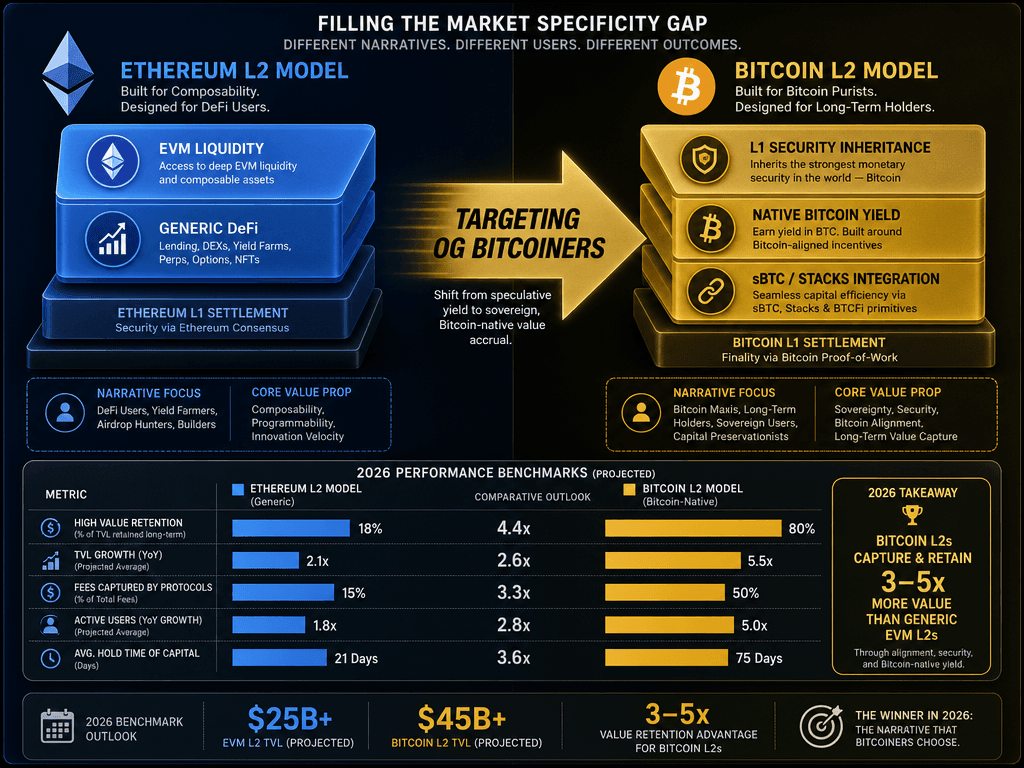
Unlike generic DeFi marketing, Bitcoin L2 strategies must emphasize native yield and L1 security to successfully convert long-term Bitcoin holders.
Bitcoin L2s face unique positioning challenges:
The Security Inheritance Question
Ethereum L2s can claim security inheritance from Ethereum's validator set with relative clarity. Bitcoin L2s have more complex relationships with base layer security depending on their architecture.
Sidechains like Rootstock use merged mining. Validity proof systems like Chainway use zero-knowledge cryptography. Stacks uses Bitcoin for finality through its Proof of Transfer mechanism. Each approach has different security tradeoffs that need explanation.
Your advertising must clearly communicate how your L2 inherits or relates to Bitcoin security without oversimplifying to the point of misleading users. OG Bitcoiners will dig into the technical details and call out exaggerated claims.
The "Not Your Keys" Principle
Bitcoin culture places enormous weight on self-custody. Projects requiring users to bridge Bitcoin to wrapped tokens face immediate skepticism.
If your protocol requires wrapping BTC, your advertising needs to address that directly:
Who custodies the locked Bitcoin?
What proof mechanism ensures wrapped tokens are properly backed?
Can users independently verify reserves?
What happens if the bridge or wrapping mechanism fails?
Projects that can offer native BTC interactions without wrapping have a significant narrative advantage. Lead with that capability if you have it.
The "Sound Money" Narrative
Bitcoin holders often view BTC as sound money that shouldn't be risked in DeFi experiments. Advertising yield opportunities to this audience requires acknowledging their conservative stance and positioning your protocol as aligning with rather than contradicting Bitcoin principles.
Bad framing: "Stop letting your Bitcoin sit idle - put it to work earning yield."
This frames holding Bitcoin as a mistake, which alienates the exact people you're trying to reach.
Better framing: "Bitcoin holders can now access DeFi yields without sacrificing custody or Bitcoin's security guarantees."
This acknowledges the validity of HODLing while introducing new possibilities for those interested.
Competing for Attention in a Crowded L2 Market
Bitcoin L2 development exploded between 2024 and 2026. Your advertising needs to differentiate not just from Ethereum or alternative L1s, but from other Bitcoin scaling solutions.
The projects that break through clearly communicate a specific advantage:
Fastest finality
Most decentralized
Best developer tooling
Largest existing ecosystem
Strongest Bitcoin security inheritance
Unique technical approach
Trying to be the best at everything makes you the best at nothing. Pick one or two dimensions where you genuinely lead and build your advertising narrative around those strengths.
h2, h3