
87
Published
August 2026
Updated
August 2026
How Web3 Brands Can Partner with the Right Sports Marketing Companies

Tyler Mullins
Founder & Owner of OMNI
Introduction
The sports marketing industry is undergoing a fundamental transformation. Web3 brands collectively invested US$565 million in sports sponsorships in 2024/25, representing a 20% year-on-year increase as the industry matures beyond speculative hype toward infrastructure-focused partnerships.
But here's the challenge: traditional sports marketing agencies excel at securing stadium deals and athlete endorsements, yet most lack the technical depth to convert a stadium full of fans into wallet-holding community members. Meanwhile, Web3-native agencies understand Discord and tokenomics but often can't navigate the compliance requirements or league relationships needed for mainstream sports partnerships.
This guide breaks down the sports marketing landscape specifically for Web3 founders, DeFi protocols, gaming studios, and AI infrastructure projects looking to bridge the gap between mainstream sports audiences and decentralized ecosystems.
Table of Contents
What Are Sports Marketing Companies?
The Bridge Framework: Modern Web3 Sports Marketing
Categorizing the Landscape: Traditional vs. Web3-Native
Web3-Native Sports Marketing Powerhouses
Traditional Giants with Web3 Capabilities
What Are the Top 5 Sports Marketing Agencies?
The ROI Checklist for Web3 Sports Partnership
Measuring Success: Metrics That Matter
Regulatory Compliance in Sports Marketing
How Much Does Sports Marketing Cost for a Startup?
What Is a Web3 Marketing Agency?
Frequently Asked Questions
What Are Sports Marketing Companies?
Sports marketing companies specialize in connecting brands with sports audiences through sponsorships, athlete endorsements, stadium naming rights, team partnerships, and fan activation campaigns. They negotiate deals, create activation strategies, and measure the impact of sports-related marketing investments.
For Web3 projects, the right sports marketing partner doesn't just secure logo placement during a match. They architect campaigns that convert passive viewers into active community participants - the fans who join your Discord, connect their wallets, and engage with your protocol.
The traditional model focused on impressions and brand awareness. The Web3 model demands measurable on-chain outcomes: wallet connections, token holders, community retention, and protocol interaction. 67% of fans find brands more attractive when they sponsor sports events, but attraction alone doesn't build a decentralized ecosystem.
The Bridge Framework: Modern Web3 Sports Marketing
Successful Web3 sports marketing operates across three interconnected pillars that transform passive brand awareness into active on-chain engagement.
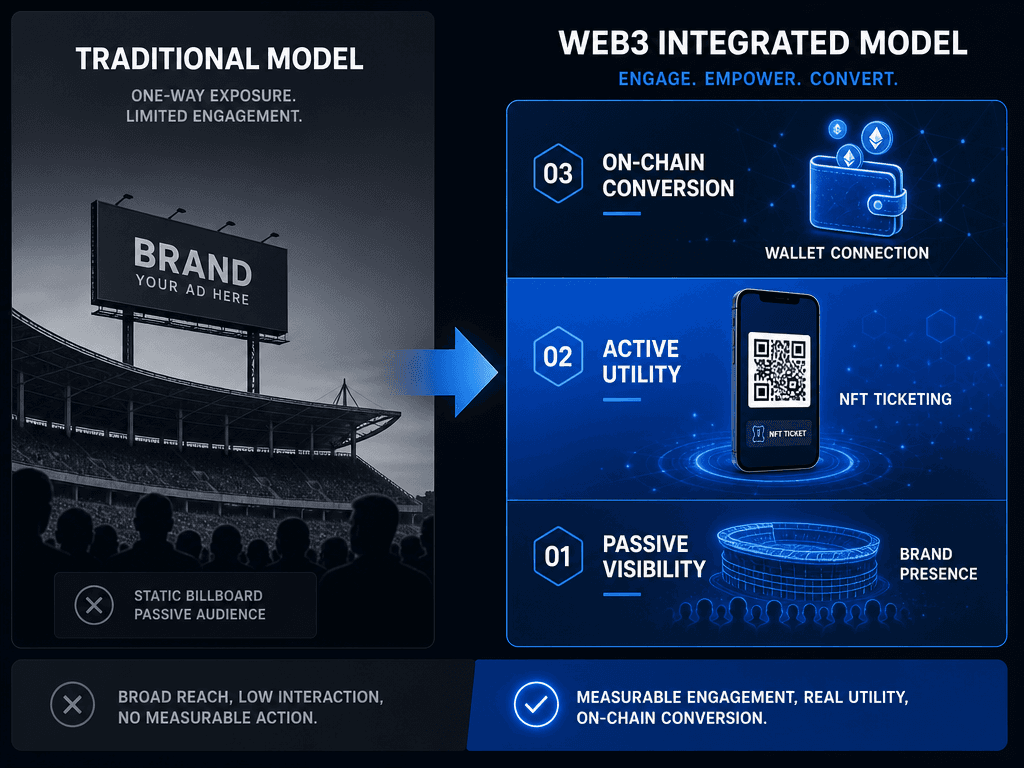
Transitioning from passive brand awareness to active on-chain engagement is the critical differentiator for modern Web3 sports marketing strategies and high-growth protocols.
Visibility: League and Stadium Partnerships
This is where traditional agencies excel. Securing partnerships with professional teams, leagues, or venues puts your brand in front of massive audiences. Think jersey patches, LED board placements, or stadium naming rights. The best Web3 applications include QR codes or specific calls-to-action that drive viewers from broadcast to digital channels.
Utility: NFT Ticketing and Token-Gated Experiences
This is where Web3 native expertise becomes critical. Modern sports partnerships should incorporate blockchain-powered fan experiences: NFT-based ticket sales, token-gated VIP areas, on-chain collectibles tied to game moments, or loyalty programs built on your protocol. These activations provide measurable on-chain data and create genuine utility for your token or NFT collection.
Conversion: From Fan to Community Member
The hardest part of any Web3 sports campaign is converting a casual sports fan into an active protocol user. This requires carefully designed user journeys that bridge Web2 discovery (seeing your logo during a match) to Web3 participation (connecting a wallet and joining your ecosystem). The agency you choose should understand both the sports side and the technical requirements of wallet onboarding, gas optimization, and community management.
The Blockchain in Sports Market is projected to grow at a 15.48% CAGR from 2025 to 2035, signaling that infrastructure for these three pillars will only become more sophisticated.
Categorizing the Landscape: Traditional vs. Web3-Native

Choosing the right partner requires balancing technical blockchain expertise with the massive scale of traditional sports leagues to ensure a successful mainstream expansion.
The sports marketing landscape for Web3 brands splits into three distinct categories, each with specific strengths and ideal use cases.
Web3-Native Powerhouses
These agencies were built specifically to serve blockchain, crypto, and decentralized projects. They understand protocol architecture, tokenomics, wallet infrastructure, and community dynamics. Their sports marketing approach starts with on-chain outcomes and works backward to the sponsorship deal.
Strengths:
Deep understanding of Discord, Telegram, and crypto-native social channels
Experience with token launches, NFT drops, and community retention
Knowledge of regulatory requirements specific to crypto advertising
Ability to integrate smart contracts and on-chain tracking into campaigns
Native relationships with Web3 influencers and KOLs
Limitations:
May lack relationships with major leagues or tier-one sports properties
Smaller budgets for traditional media buys compared to holding company agencies
Less experience with large-scale broadcast sponsorship logistics
Traditional Sports Giants with Web3 Arms
These are established sports marketing firms that have added blockchain and crypto capabilities in response to client demand. They bring decades of sports industry relationships and operational expertise but often treat Web3 as one vertical among many.
Strengths:
Established relationships with leagues, teams, and athlete representatives
Experience executing large-scale stadium and broadcast deals
Deep understanding of sports media rights and activation logistics
Global presence and multi-market capabilities
Limitations:
Web3 expertise varies significantly by agency and team
Often lack technical understanding of DeFi, NFT mechanics, or protocol design
May prioritize traditional metrics (impressions, reach) over on-chain outcomes
Limited experience with community management platforms
Activation Specialists
These agencies focus specifically on fan engagement technology, including NFT platforms, token-gated experiences, and blockchain-powered loyalty programs. They're the technical implementation layer rather than the deal-making layer.
Strengths:
Deep technical expertise in NFT minting, smart contracts, and wallet integration
Experience building fan engagement platforms on blockchain
Understanding of user experience challenges in Web3 onboarding
Limitations:
Rarely handle the sponsorship negotiation itself
Often require partnership with a traditional or Web3-native agency for full execution
May lack broader marketing strategy capabilities
Web3-Native Sports Marketing Powerhouses
OMNI Agency
OMNI operates as a full-stack Web3 marketing partner with extensive experience bridging mainstream audiences and decentralized ecosystems. Over five years, the agency has supported 100+ blockchain projects across token launches, community building, influencer campaigns, and paid media strategy.
Sports Marketing Capabilities:
Strategic planning for mainstream sports partnerships
On-chain activation design (NFT ticketing, token-gated fan experiences)
Community management across Discord and Telegram
Crypto influencer marketing through a network of 400+ creators
Regulatory compliance guidance for crypto advertising in sports contexts
Full integration with crypto paid advertising and social media management
Ideal For: DeFi protocols, gaming studios, AI infrastructure projects, and DePIN networks seeking to scale into mainstream sports audiences while maintaining strong on-chain conversion metrics.
OMNI's approach centers on reducing customer acquisition costs through unified channel strategy. The agency handles everything from negotiating stadium deals to managing post-event Discord growth, ensuring that every sports marketing dollar maps to measurable protocol outcomes.
Ninja Promo
Ninja Promo positions itself as a full-service Web3 marketing agency with particular strength in community building and influencer activation. The agency operates on a subscription model that allows projects to scale services as they grow.
Sports Marketing Approach:
Focus on digital and social amplification of sports partnerships
Community activation campaigns tied to sporting events
Influencer and creator partnerships in the sports vertical
Growth marketing tied to specific athlete or team sponsorships
Best For: Projects that have already secured a sports partnership and need help activating it across digital channels and building community engagement around the deal.
MarketAcross
MarketAcross specializes in PR and thought leadership for blockchain projects, with sports marketing as one component of broader media strategy. The agency excels at securing media coverage and positioning executives as industry voices.
Sports Marketing Strengths:
Securing press coverage around sports sponsorship announcements
Thought leadership content tying sports and blockchain
Media training for founders appearing at sports events
Narrative development around Web3 utility in sports
Ideal For: Projects where the primary goal of a sports partnership is media exposure and industry positioning rather than direct user acquisition.
Traditional Giants with Web3 Capabilities
Two Circles
Two Circles built its reputation on data-driven sports marketing for major brands and leagues. The agency uses fan data and analytics to optimize sponsorship value and has expanded into blockchain partnerships as client demand increased.
Strengths:
Elite connections with leagues, teams, and global sports properties
Sophisticated fan data analytics and audience segmentation
Experience executing large-scale multi-market sponsorship campaigns
Strong capabilities in broadcast rights and media planning
Considerations for Web3 Brands:
Web3 technical depth varies by team and project
Minimum engagement budgets typically exceed what early-stage protocols can allocate
Best suited for later-stage projects with significant marketing budgets and mainstream expansion goals
Wasserman
Wasserman operates across talent representation, brand consulting, and property solutions, giving the agency unique access to athletes, teams, and leagues. The company has worked with crypto brands on endorsement deals and team partnerships.
Strengths:
Direct relationships with A-list athletes and talent
Global reach and multi-sport capabilities
Experience negotiating complex, multi-year partnership deals
Strong broadcast and media planning capabilities
Considerations for Web3 Brands:
Generalist heritage means crypto projects may not receive specialized attention
Higher costs reflect the agency's enterprise positioning
On-chain activation may require coordination with separate technical partners
What Are the Top 5 Sports Marketing Agencies?
The "top" agencies depend entirely on your specific needs, budget, and stage. Here's how to evaluate the landscape based on what matters most to Web3 founders:
For Full-Stack Web3 Sports Campaigns (Pre-Seed to Series B):
OMNI Agency - Five years Web3-native, full-service under one roof
Ninja Promo - Strong community focus with subscription scaling
MarketAcross - When PR and thought leadership are primary goals
For Enterprise-Scale Traditional Sports Deals (Series B+):
Two Circles - Data-driven approach with elite league relationships
Wasserman - Unmatched athlete and talent access
Octagon - Multi-sport global capabilities
For Technical Activation Implementation: Agencies that specialize in building the actual blockchain infrastructure for fan engagement (often used alongside, not instead of, the agencies above).
The right choice depends on whether you're optimizing for mainstream reach, on-chain conversion, or both - and whether you have the budget for a traditional agency's minimum engagement requirements.
The ROI Checklist for Web3 Sports Partnership
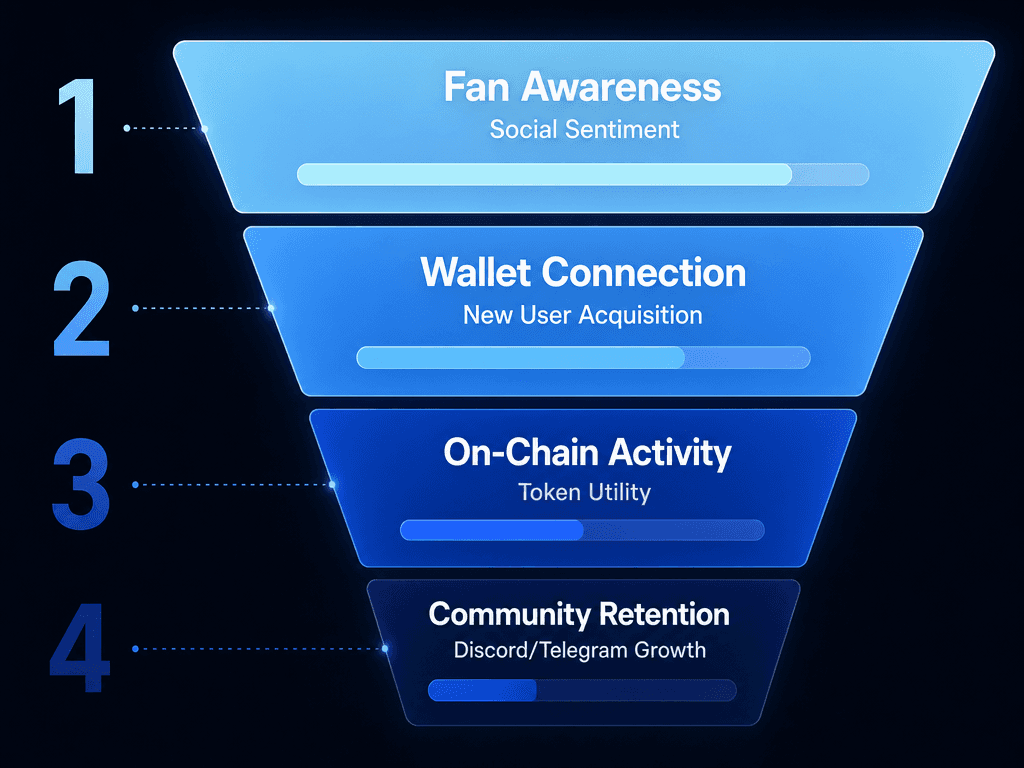
Modern sports marketing ROI is measured beyond impressions, focusing on quantifiable on-chain metrics like wallet connections and direct community growth for decentralized ecosystems.
Before signing a sports marketing agreement, demand clear answers on how the agency will track and optimize these metrics:
Awareness Metrics
Impressions and reach (traditional, but still relevant)
Social media engagement tied to sports content
Website traffic from sports-related campaigns
Brand awareness lift in target demographics
Conversion Metrics
Wallet connections attributed to the sports campaign
New Discord or Telegram members from campaign-specific links
NFT claims or mints tied to sports activation
Token holders acquired through sports-related onboarding
Engagement Metrics
On-chain activity from sports-acquired users vs. other channels
Community retention rates for sports-acquired members
Protocol interaction depth (beyond initial wallet connection)
Social sentiment and conversation volume during campaign period
Efficiency Metrics
Cost per wallet acquisition (sports channel vs. other channels)
Customer acquisition cost for sports-sourced users
Return on ad spend for any paid media supporting the sports deal
Lifetime value projections for sports-acquired users
The best agencies will help you instrument tracking before the campaign launches, not scramble to measure impact after the fact. Understanding how to properly evaluate your crypto marketing strategy across multiple channels makes it easier to isolate the true contribution of sports partnerships.
Measuring Success: Metrics That Matter
Traditional sports marketing agencies report success in impressions, broadcast minutes, and social media mentions. Those metrics matter for brand awareness, but Web3 founders need to track outcomes that directly impact protocol growth.
On-Chain Attribution: The gold standard is tracking wallet addresses through the entire journey - from seeing your stadium ad to connecting a wallet to making their first protocol interaction. This requires technical implementation (unique landing pages, referral parameters, on-chain tracking) that many traditional agencies can't deliver on their own.
Community Growth vs. Community Quality: A sports campaign might drive a sharp increase in Discord members or social followers. But if those users don't engage, don't hold tokens, and churn within weeks, the partnership failed. Measure retention curves and engagement rates specifically for sports-acquired users.
Comparative CAC: Calculate the true cost per wallet acquisition or cost per protocol user from your sports partnership. Compare that to your other growth channels. Sports marketing often works best as part of a broader strategy that includes web3 influencer marketing and community-driven growth tactics.
Media Value vs. Direct Response: Some sports partnerships deliver value through earned media and brand positioning rather than direct user acquisition. Be clear on your primary goal before choosing metrics. A stadium naming rights deal might never deliver the lowest CAC, but could provide legitimacy and awareness that supports all your other channels.
Regulatory Compliance in Sports Marketing
Crypto advertising faces restrictions in many markets, and sports sponsorships don't exempt you from those rules. The right sports marketing agency should understand:
Broadcast Advertising Restrictions: Many countries regulate how crypto products can be advertised during live sporting events. The UK's Financial Conduct Authority, for example, has specific requirements around risk warnings and promotional balance. Your stadium LED board or jersey patch might be acceptable, but corresponding broadcast spots might require additional disclaimers or face rejection entirely.
Geographic Variability: A global sports property (Formula 1, Champions League, NBA) reaches audiences across dozens of jurisdictions with different crypto advertising rules. Your agency should help you navigate which markets can receive which messages, and structure activations that comply with local requirements.
Platform-Specific Guidelines: If your sports partnership includes social media amplification, different platforms have different crypto advertising policies. What works on Twitter might violate TikTok's guidelines. What's acceptable as organic content might cross the line as paid promotion.
Securities Considerations: Be extremely careful about any sports marketing that could be construed as investment advice or an invitation to buy securities. Generic brand awareness is safer than specific token utility claims or return projections, especially in markets where regulatory clarity remains limited.
Working with an agency experienced in crypto paid advertising compliance significantly reduces the risk of expensive mistakes or campaigns that get shut down mid-activation.
How Much Does Sports Marketing Cost for a Startup?
Sports marketing budgets vary dramatically based on property tier, activation complexity, and agency services required.
Stadium and Venue Partnerships: Regional sports properties and minor league teams typically offer more accessible entry points for emerging Web3 brands. Major league team partnerships require substantially larger investments. Stadium naming rights for professional venues represent the highest tier of investment depending on the market and league.
Athlete Endorsements: Emerging athletes or those in smaller sports may work with crypto brands at considerably lower rates than established stars in major sports who command substantial annual deals. The athlete's willingness to actively promote (social posts, appearances, content creation) significantly impacts value.
Event Sponsorships: Single-event sponsorships (title sponsor of a race, presenting partner of a tournament) vary widely based on event scale and reach, from smaller regional events to major international competitions.
Agency Fees: Traditional sports marketing agencies often work on commission or project-based fees depending on scope. Web3-native agencies like OMNI typically offer more flexible engagement models, from project-based execution to ongoing monthly retainers that bundle strategy, activation, and measurement.
Total Investment Range: Early-stage Web3 projects might enter sports marketing with more modest budgets for regional or digital-first partnerships. Mid-stage protocols typically allocate larger sums for meaningful tier-two sports partnerships. Later-stage projects with mainstream expansion goals might commit substantially more for major league or global sports properties.
The key is ensuring your activation budget matches your property investment. Securing a meaningful team sponsorship but allocating insufficient funds for activation, creative, and measurement usually delivers poor results.
What Is a Web3 Marketing Agency?
A Web3 marketing agency specializes in growth strategies for blockchain, cryptocurrency, DeFi, NFT, gaming, and decentralized infrastructure projects. Unlike traditional agencies, Web3-native firms understand protocol mechanics, tokenomics, wallet infrastructure, on-chain analytics, and community-driven growth models.
Core Capabilities:
Community building across Discord, Telegram, and crypto-native platforms
Token launch strategy and go-to-market planning
Influencer and KOL partnerships within crypto communities
Crypto-compliant paid advertising across permitted channels
Content marketing that educates technical audiences
PR and media relations within blockchain-focused publications
On-chain analytics and wallet-based attribution
What Makes Them Different: Traditional marketing agencies optimize for brand awareness, website traffic, and lead generation. Web3 agencies optimize for wallet connections, on-chain activity, token holder growth, and community retention. They understand the difference between a Discord server and a CRM system, between Twitter impressions and crypto Twitter influence, between traditional PR and getting covered in The Block or CoinDesk.
OMNI operates as one of the most established full-service Web3 agencies, supporting 100+ projects across the entire growth stack. That means combining sports marketing strategy with the community management, social media, influencer network, and paid media capabilities required to convert awareness into active protocol users.
For founders evaluating agencies, look for teams that have actually launched tokens, built communities from zero, and delivered measurable on-chain outcomes - not just traditional agencies with a "blockchain practice."
h2, h3
